Calcium disorders
Blossom-end rot on tomatoes and tipburn on lettuce are both caused by too little calcium reaching one part of the plant. Usually there's plenty of calcium in the root zone. Below is how to check, and what to change when the plant isn't moving calcium where it's needed. The VPD guide has more on transpiration.
How calcium moves
Calcium travels in the xylem, the tubes that carry water up from the roots. Water moves up because leaves lose it through their pores. This is called transpiration. Leaves transpire more when VPD is high and less in humid air. The more water a part of the plant transpires, the more calcium it gets.
Once calcium is in a leaf or fruit, the plant can't move it again. It can move nitrogen from old leaves to new growth, but not calcium.
Fruit and young inner leaves transpire the least, so they get the least calcium. Deficiency shows up there first, even when the older leaves and a leaf test look normal.
- Mature leaves transpire the most, so most of the calcium ends up there and stays.
- Calcium doesn't move back out of old leaves to new growth.
- Young inner leaves transpire little, so they get little calcium. Lettuce tipburn starts there.
- Fruit gets about 84% of its water through the phloem, which carries almost no calcium. Its calcium comes only from the small share that arrives through the xylem.
- The blossom end is farthest from that supply. Blossom-end rot starts there.
- Night root pressure: with the leaves barely transpiring at night, root pressure can push sap into those weak spots, but only when the humidity is near 90 to 95% RH.
Feed or transport
Before adding calcium, test the soil or media. If calcium is already in the normal range, adding more won't help.
Uneven watering and damaged roots make it worse. So do feeds heavy in ammonium, potassium or magnesium, which compete with calcium at the root.
Affected fruit and leaves won't recover. Check new fruit and leaves a week or two after making changes.
Tomatoes
Blossom-end rot starts as a water-soaked spot at the bottom of the fruit that turns dark and leathery. It's most common on the first fruit, while they're small and growing fast.
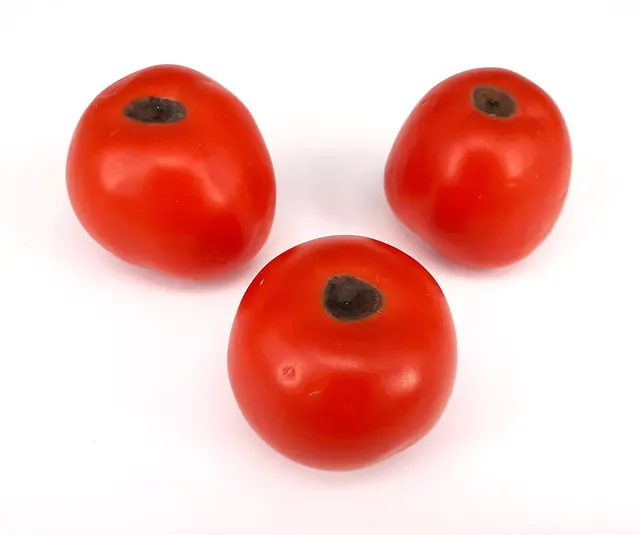
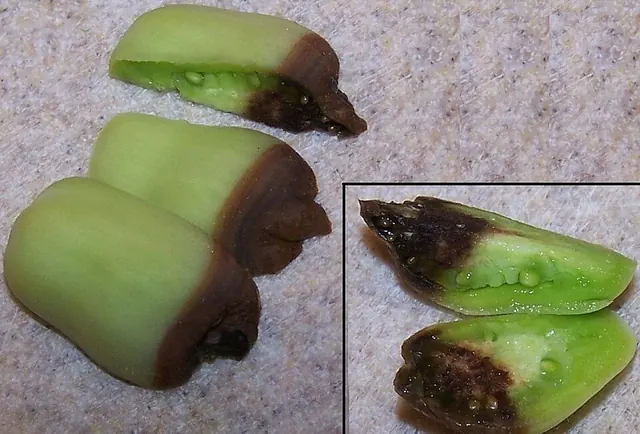
- Keep watering even. Going from dry to wet is the most common cause. Mulch helps in the garden.
- Watch VPD in hot, dry spells. At very high VPD, leaves take most of the water and the fruit gets less. Very humid air also slows transpiration from the fruit.
- Go easy on nitrogen. Too much nitrogen means more leaves pulling calcium away from fruit. Favor nitrate over ammonium.
- Keep EC in range. High salts raise the risk.
Calcium sprays don't help much, because fruit takes up very little through its skin.
Lettuce
Tipburn browns the edges of young inner leaves. It's most common when plants grow fast under strong light and new leaves grow faster than calcium can reach them.
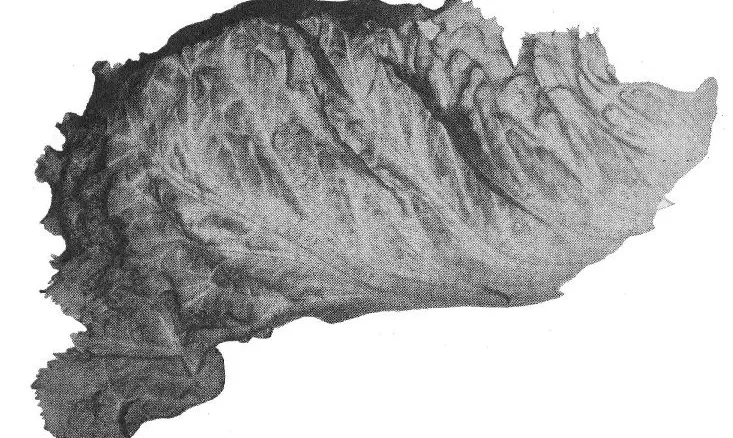
- Keep air moving. Fans that blow across the plants help the inner leaves transpire. The Airflow Planner shows where a fan layout leaves still air.
- Avoid long stretches of very damp air. When VPD stays low, transpiration slows down.
- Don't push growth too hard. Very high light or temperatures speed up growth and make tipburn more likely.
Calcium sprays have helped leaf lettuce in trials, but they don't reach the inner leaves of head lettuce in time.
Summary
- Calcium moves with water through transpiration, and the plant can't move it again later.
- Blossom-end rot and tipburn usually happen when calcium isn't reaching fruit or inner leaves, even with enough in the feed.
- Test the root zone before adding calcium.
- Even watering, VPD in range, moving air and moderate EC do more than extra calcium.
- Damaged fruit and leaves won't recover, so check new growth.
Sources
Peer-reviewed research and university extension.
- Ho, L.C. and White, P.J. (2005), "A cellular hypothesis for the induction of blossom-end rot in tomato fruit," Annals of Botany 95(4): 571–581 ↗. Calcium transport to fruit.
- Adams, P. and Ho, L.C., "Effects of environment on the uptake and distribution of calcium in tomato and on the incidence of blossom-end rot" ↗, Plant and Soil. Humidity, salinity and calcium in fruit.
- Ernest, E.G. and Johnson, G., University of Delaware Extension (2018), "Blossom End Rot Revisited" ↗. Watering, competing nutrients, and why sprays do little for fruit.
- Latin, R.X., Purdue Extension, "Blossom End Rot of Tomato Fruit," BP-13-W ↗. Symptoms and garden management.
- UC Statewide IPM Program, "Tipburn," Lettuce Pest Management Guidelines ↗. Causes, fast growth, and the limits of sprays.
Keep reading
Mulder's chart
The nutrient interaction wheel, with a source for each line. Tap a nutrient to see what it blocks, what it helps, and which lines have no evidence.
14 min read NutritionNutrient solution pH
How pH affects nutrient uptake, the pH to aim for, why it drifts, and how to adjust it.
3 min read IndexAll Bizon guides
Everything published so far, and what is being written next.
Browse the guides