Plant Problem Diagnosis Key / Nutrient problems
Nutrient
Sulfur deficiency
S
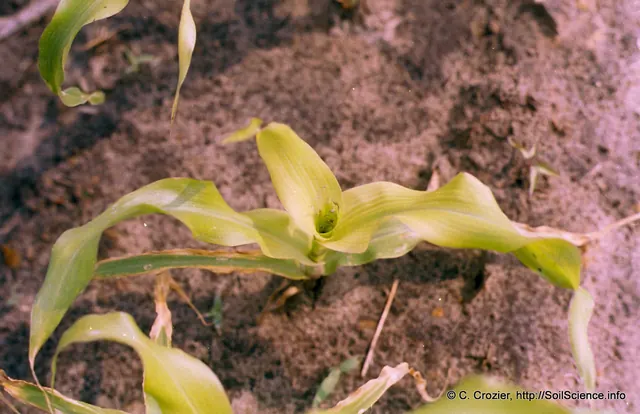
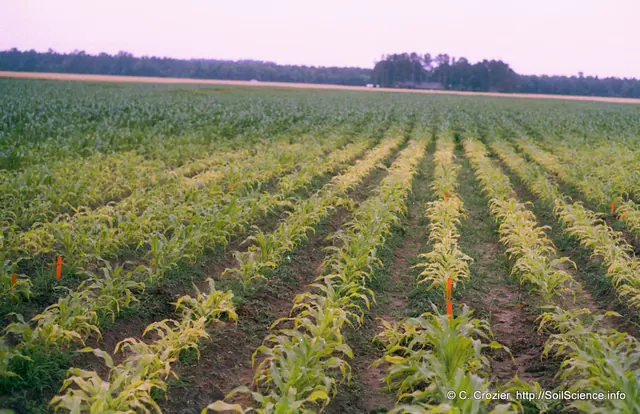
Sulfur is less mobile than nitrogen, so it shows on newer leaves first as an even yellowing. More common in sandy, low-organic soils and in cool springs.
Signs
- New and upper leaves evenly pale or yellow, veins included.
- Thin stems, slow growth; older leaves may stay greener.
What favors it
Sandy, low-organic soil, high rainfall or irrigation that leaches sulfate, and cool springs.
Prevention
- Add compost to garden soils.
Often confused with
Sources
- Sulfur for Minnesota soilsUniversity of Minnesota Extension
- My plants are yellowing. What is wrong with them?Purdue University
Treatment by crop
Cultural, biological and chemical options in the order to use them, and notes written for each crop.
Identification is free. Treatment is on the Home and Pro plans.
Questions in the key that lead here
- Look the plant over, leaf undersides included. Are insects, mites, slugs, eggs, webbing or droppings on it?
No, only damage or discoloration - Where is the problem?
Leaves - What does the leaf damage look like?
Color change without distinct spots - Where did the color change start?
Newest, upper leaves - What do the new leaves look like?
Evenly pale or yellow-green, veins included
Not a match? Start the key or describe what you see.
More photos
More from university Extension: search Extension pages on sulfur deficiency, or find a plant diagnostic lab through your state's Extension.