Plant Problem Diagnosis Key / Nutrient problems
Calcium deficiency (and tipburn)
Ca
Calcium travels only with the transpiration stream and does not move once placed. Shortage hits young, slow-transpiring tissue: new leaves, inner heads and fruit. Most cases come from uneven water or humidity, not low soil calcium.
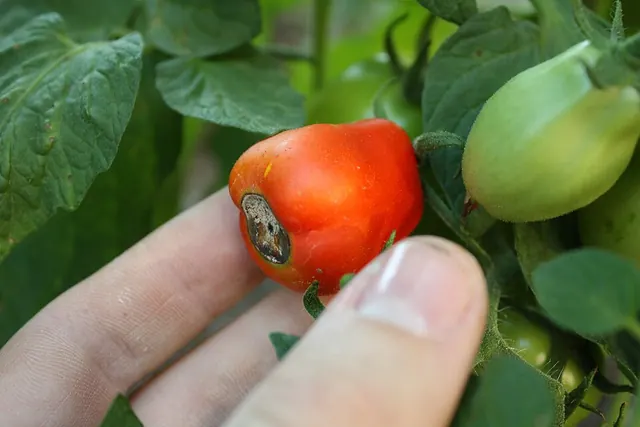
Signs
- Browned margins on young, inner leaves; fine dead specks along the edge.
- Browned tips on the newest and inner leaves only (lettuce, cabbage, strawberry), while older leaves stay clean.
- Blossom-end rot in tomato, pepper and squash; bitter pit in apple.
What favors it
Uneven watering, high humidity or still air that slows transpiration, high potassium or nitrogen, and fast growth.
Prevention
- Water evenly; mulch to hold soil moisture steady.
- Keep air moving over young growth; avoid very high humidity at night.
- Avoid overfeeding potassium and nitrogen.
Often confused with
Sources
- Lettuce: TipburnUC Statewide IPM Program
- Calcium and Boron Deficiencies in Brassica CropsUniversity of Delaware Cooperative Extension
Treatment by crop
Cultural, biological and chemical options in the order to use them, and notes written for each crop.
Identification is free. Treatment is on the Home and Pro plans.
Questions in the key that lead here
- Look the plant over, leaf undersides included. Are insects, mites, slugs, eggs, webbing or droppings on it?
No, only damage or discoloration - Where is the problem?
Leaves - What does the leaf damage look like?
Color change without distinct spots - Where did the color change start?
Leaf tips and edges, brown and crispy - When did the edges burn?
Inner, young leaves of lettuce, cabbage or strawberry
Not a match? Start the key or describe what you see.
More from university Extension: search Extension pages on calcium deficiency, or find a plant diagnostic lab through your state's Extension.