Plant Problem Diagnosis Key / Pests
Broad mites and cyclamen mites
Polyphagotarsonemus latus, Phytonemus pallidus
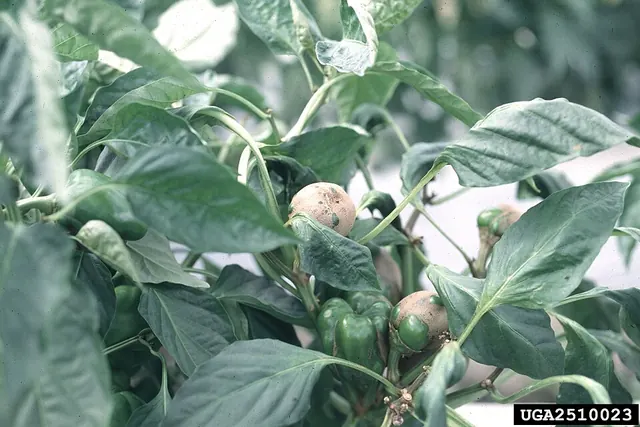
Mites too small to see without a 20x lens, living in the growing tips. Their saliva distorts new growth, so the damage is usually seen long before the mites.
Signs
- New leaves curl, twist, turn strap-like or bronzed, and stay small.
- Flower buds abort or open malformed; cyclamen mite leaves crinkle and turn brittle.
- Under a 20x lens or microscope: clear, oval mites and eggs dotted with white bumps.
What favors it
Warm, humid greenhouses, and infested cuttings or transplants brought in.
Prevention
- Buy clean plants; inspect new ones at the growing tips with a 20x lens, or keep them apart until checked.
- Check plants next to the worst damage; mites move on to fresh plants nearby.
- Predatory mites work in greenhouses, not where residual miticides were used.
Crops it shows up on
Tomato, pepper & eggplant; Strawberry; Roses & ornamentals; Houseplants; Hemp & cannabis.
Often confused with
Sources
- Cyclamen Mite and Broad Mite in Ornamental PlantsNC State Extension
- Broad Mites on High Tunnel TomatoesUniversity of Maryland Extension
- Broad MiteVirginia Cooperative Extension
Treatment by crop
Cultural, biological and chemical options in the order to use them, and notes written for each crop.
Identification is free. Treatment is on the Home and Pro plans.
Questions in the key that lead here
- Look the plant over, leaf undersides included. Are insects, mites, slugs, eggs, webbing or droppings on it?
Yes, something living or its traces - What is on the plant?
Specks that are hard to see by eye - What does the damage look like?
Twisted, shiny or bronzed growth, no webbing - Where did it start?
The newest leaves and growing tips
Not a match? Start the key or describe what you see.
More photos
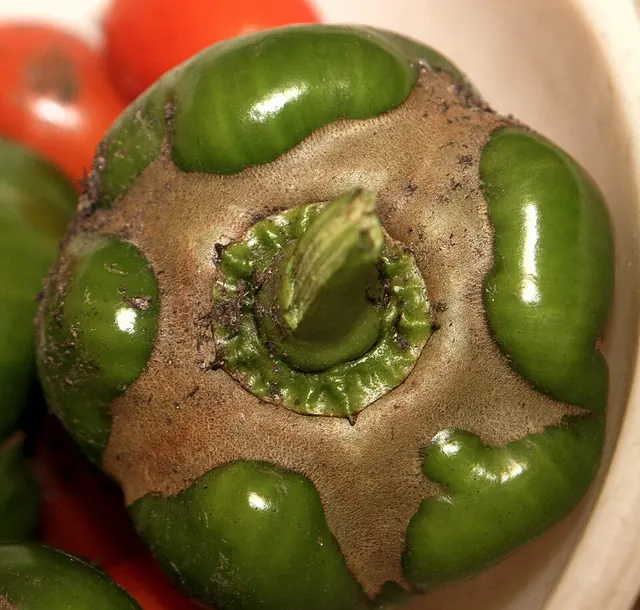
More from university Extension: search Extension pages on broad mites and cyclamen mites, or find a plant diagnostic lab through your state's Extension.
Other pests
- Aphids
- Bagworms
- Bark beetles of pine and spruce
- Caterpillars
- Cicada and twig-cutting damage
- Colorado potato beetle
- Cucumber beetles
- Cutworms
- Elm leaf beetle
- Emerald ash borer
- Flea beetles
- Fungus gnats
- Galls on leaves and twigs
- Hemlock woolly adelgid
- Japanese beetles
- Lace bugs
- Leafminers
- Mealybugs
- Pine sawflies
- Root aphids
- Root-knot nematodes
- Russet mites
- Sapsucker damage
- Scale insects
- Shore flies
- Slugs and snails
- Spider mites
- Spongy moth (gypsy moth)
- Spotted lanternfly
- Squash bugs and stink bugs
- Squash vine borer
- Tent caterpillars and fall webworm
- Thrips
- Whiteflies
- Wood borers