Plant Problem Diagnosis Key / Pests
Spotted lanternfly
Lycorma delicatula
An invasive planthopper that sucks sap from tree of heaven, maple, black walnut, birch, willow and grape, often in large numbers. It drips honeydew that grows black sooty mold, and it is a nuisance on most landscape trees more than a killer, except on grape.
Signs
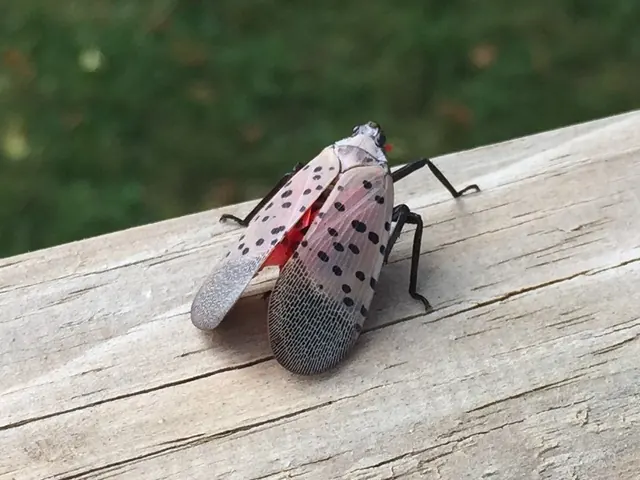
- Adults about an inch long with gray, black-spotted front wings and red hind wings that flash in flight.
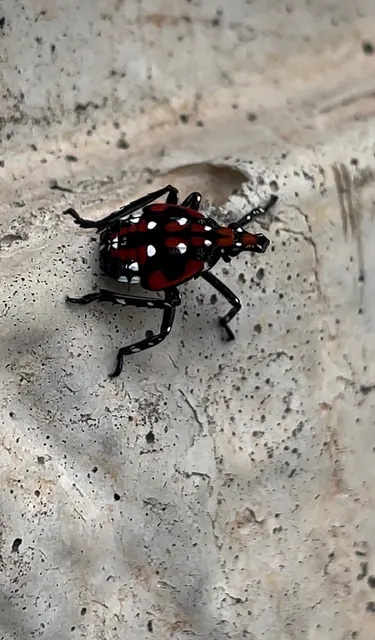
- Young nymphs black with white spots; older nymphs red and black with white spots.
- Gray, mud-like egg masses on bark, stone, vehicles and outdoor furniture in fall and winter.
- Sticky honeydew and black sooty mold on the trunk, plants and paving below.
What favors it
Tree of heaven, its favorite host, plus maple, black walnut, birch, willow and grapevines. It spreads as egg masses on vehicles, firewood, stone and outdoor furniture.
Prevention
- Check vehicles, trailers and outdoor items before leaving an area where it is established.
- Scrape egg masses from fall to spring into a bag or container of rubbing alcohol.
- Remove tree of heaven.
Crops it shows up on
Shade & ornamental trees; Apple, pear & stone fruit; Roses & ornamentals.
Often confused with
Sources
- Spotted Lanternfly in Home GardensUniversity of Maryland Extension
- Spotted LanternflyUMass Amherst Extension
Treatment by crop
Cultural, biological and chemical options in the order to use them, and notes written for each crop.
Identification is free. Treatment is on the Home and Pro plans.
Questions in the key that lead here
- Look the plant over, leaf undersides included. Are insects, mites, slugs, eggs, webbing or droppings on it?
No, only damage or discoloration - Where is the problem?
A tree or shrub - Which part of the tree or shrub shows the problem?
Leaves of a broadleaf tree or shrub - What do the leaves show?
Sticky honeydew dripping, or a black sooty film - Look at the leaf undersides and the twigs.
Gray planthoppers with black spots, or black nymphs with white spots, on the trunk and branches
Not a match? Start the key or describe what you see.
More photos
More from university Extension: search Extension pages on spotted lanternfly, or find a plant diagnostic lab through your state's Extension.
Other pests
- Aphids
- Bagworms
- Bark beetles of pine and spruce
- Broad mites and cyclamen mites
- Caterpillars
- Cicada and twig-cutting damage
- Colorado potato beetle
- Cucumber beetles
- Cutworms
- Elm leaf beetle
- Emerald ash borer
- Flea beetles
- Fungus gnats
- Galls on leaves and twigs
- Hemlock woolly adelgid
- Japanese beetles
- Lace bugs
- Leafminers
- Mealybugs
- Pine sawflies
- Root aphids
- Root-knot nematodes
- Russet mites
- Sapsucker damage
- Scale insects
- Shore flies
- Slugs and snails
- Spider mites
- Spongy moth (gypsy moth)
- Squash bugs and stink bugs
- Squash vine borer
- Tent caterpillars and fall webworm
- Thrips
- Whiteflies
- Wood borers