Plant Problem Diagnosis Key / Pests
Hemlock woolly adelgid
Adelges tsugae
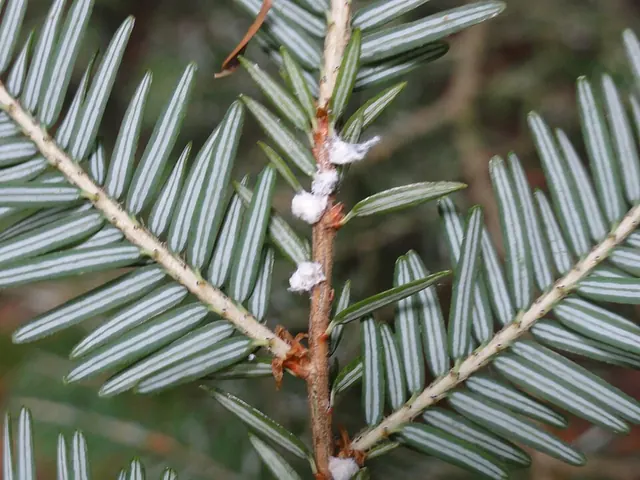
A tiny aphid relative that drains stored carbohydrates from hemlock twigs and hides under a white, woolly wax. Heavily infested eastern and Carolina hemlocks can die within four years, healthier ones in 10 or more, and it spreads on wind, birds, deer and nursery stock.
Signs
- White, cottony tufts the size of a cotton swab tip at the base of the needles, under the twigs.
- Easiest to see from late winter through spring, and again from late summer into fall.
- Needles turn gray or yellow and drop, new growth falls off, and limbs die from the bottom up.
What favors it
Eastern and Carolina hemlocks in the East; it spreads on wind, birds, deer and nursery stock.
Prevention
- Check new hemlocks under the twigs for white tufts before planting.
- Keep bird feeders out of hemlocks, and water hemlocks in dry spells.
- Do not feed infested hemlocks with nitrogen; it feeds the adelgid more than the tree.
Crops it shows up on
Evergreens & conifers (pine, spruce, juniper).
Often confused with
Sources
- Hemlock Woolly AdelgidUMass Amherst Extension
- Hemlock Woolly Adelgid on TreesUniversity of Maryland Extension
Treatment by crop
Cultural, biological and chemical options in the order to use them, and notes written for each crop.
Identification is free. Treatment is on the Home and Pro plans.
Questions in the key that lead here
- Look the plant over, leaf undersides included. Are insects, mites, slugs, eggs, webbing or droppings on it?
No, only damage or discoloration - Where is the problem?
A tree or shrub - Which part of the tree or shrub shows the problem?
Needles of a pine, spruce, fir, juniper or arborvitae - What is happening to the needles?
Something growing on the branches - What is on the branches?
White, cottony tufts at the base of the needles
Not a match? Start the key or describe what you see.
More photos
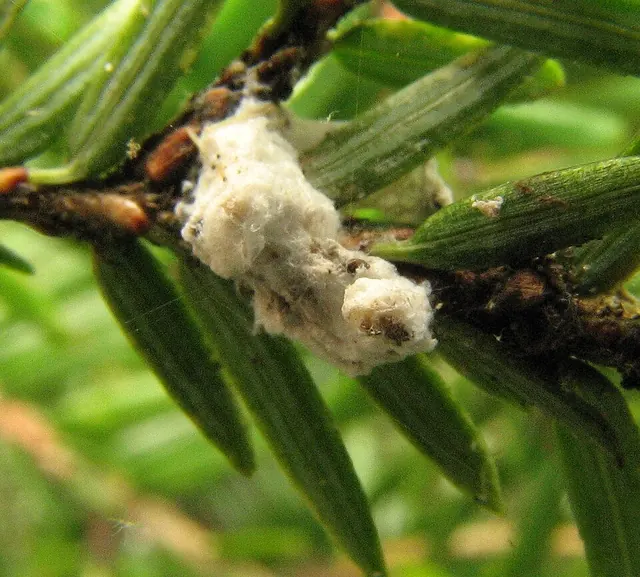
More from university Extension: search Extension pages on hemlock woolly adelgid, or find a plant diagnostic lab through your state's Extension.
Other pests
- Aphids
- Bagworms
- Bark beetles of pine and spruce
- Broad mites and cyclamen mites
- Caterpillars
- Cicada and twig-cutting damage
- Colorado potato beetle
- Cucumber beetles
- Cutworms
- Elm leaf beetle
- Emerald ash borer
- Flea beetles
- Fungus gnats
- Galls on leaves and twigs
- Japanese beetles
- Lace bugs
- Leafminers
- Mealybugs
- Pine sawflies
- Root aphids
- Root-knot nematodes
- Russet mites
- Sapsucker damage
- Scale insects
- Shore flies
- Slugs and snails
- Spider mites
- Spongy moth (gypsy moth)
- Spotted lanternfly
- Squash bugs and stink bugs
- Squash vine borer
- Tent caterpillars and fall webworm
- Thrips
- Whiteflies
- Wood borers