Plant Health Key / Pests
Pest
Thrips
Frankliniella occidentalis and others
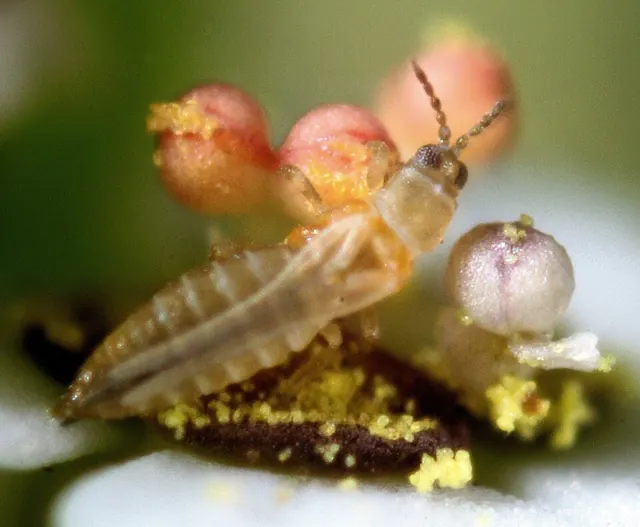
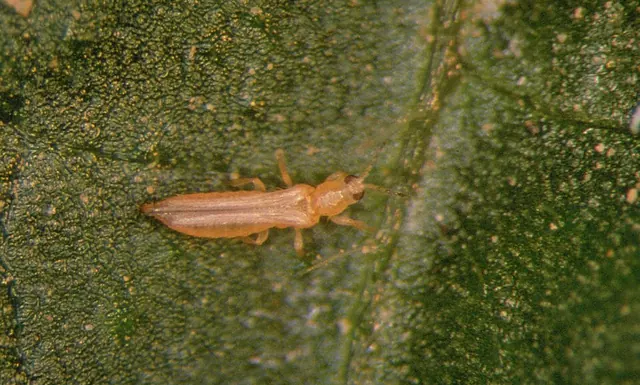
Slender insects about 1-2 mm long that rasp leaf and petal cells and suck out the contents. Some also spread plant viruses.
Signs
- Silvery or bleached patches with tiny black specks of droppings.
- Streaked or spotted petals, deformed flowers and buds.
- Yellow sticky cards catch the adults.
Risk Factors
Warm, dry conditions and plenty of flowers, which they hide in. They pupate on leaves, in the soil or in leaf litter, out of reach of most foliar sprays.
Prevention
- Hang yellow sticky cards and count weekly.
- Control weeds around the crop.
- Inspect incoming plants, especially flowering ones.
Look-Alikes
Sources
- Thrips in Home GardensUniversity of Maryland Extension
- Thrips on Vegetables and FlowersMontana State University Extension
- Thrips Management in GreenhousesUniversity of Maryland Extension
Treatment by crop
Cultural, biological and chemical options in the order to use them, and notes written for each crop.
Identification is free. Treatment is on the Pro plan.
Diagnosis Path
- Look the plant over, leaf undersides included. Are insects, mites, slugs, eggs, webbing or droppings on it?
Yes, something living or its traces - What is on the plant?
Specks that are hard to see by eye - What does the damage look like?
Silvery scars with black specks of droppings
Not a match? Start the key or describe what you see.
More photos
More from university Extension: search Extension pages on thrips, or find your state's plant diagnostic lab.
Other pests
- Aphids
- Bagworms
- Bark beetles of pine and spruce
- Broad mites and cyclamen mites
- Caterpillars
- Cicada and twig-cutting damage
- Codling moth
- Colorado potato beetle
- Cucumber beetles
- Cutworms
- Deer, rabbit and rodent feeding
- Earwigs
- Elm leaf beetle
- Emerald ash borer
- European elm scale
- Flea beetles
- Fungus gnats
- Galls on leaves and twigs
- Grasshoppers
- Hemlock woolly adelgid
- Japanese beetles
- Lace bugs
- Leafhoppers
- Leafminers
- Mealybugs
- Pine sawflies
- Root aphids
- Root maggots
- Root-knot nematodes
- Russet mites
- Sapsucker damage
- Scale insects
- Shore flies
- Slugs and snails
- Spider mites
- Spongy moth (gypsy moth)
- Spotted lanternfly
- Spotted wing drosophila
- Squash bugs and stink bugs
- Squash vine borer
- Tent caterpillars and fall webworm
- Whiteflies
- Wood borers