Plant Problem Diagnosis Key / Diseases
Black knot
Apiosporina morbosa
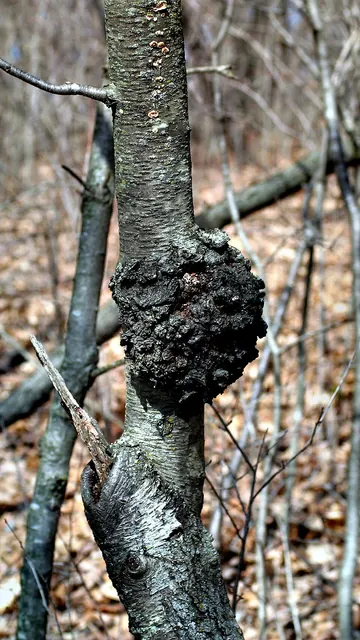
A fungus of plum, cherry and chokecherry that makes hard, black, knobby swellings on twigs and branches. Each knot grows larger every year and kills the branch beyond it, and old knots shed spores in spring rain.
Signs
- Hard, black, rough swellings around twigs and branches, from 1/2 inch to a foot or more long.
- New knots olive-green and velvety in early summer, hardening to black.
- Branches beyond large knots dying back.
What favors it
Wet springs, wild plum and chokecherry nearby, and susceptible plums such as Stanley.
Prevention
- Check plum and cherry trees every winter for knots, while the branches are bare.
- Remove knotted wild plum and chokecherry nearby, or prune their knots too.
- Plant less susceptible plums such as President, Methley or Shiro.
Crops it shows up on
Apple, pear & stone fruit; Shade & ornamental trees.
Often confused with
Sources
- Black knotUniversity of Minnesota Extension
- Black Knot of Plums and CherriesOhio State University Extension
- Black KnotMontana State University Extension
Treatment by crop
Cultural, biological and chemical options in the order to use them, and notes written for each crop.
Identification is free. Treatment is on the Home and Pro plans.
Questions in the key that lead here
- Look the plant over, leaf undersides included. Are insects, mites, slugs, eggs, webbing or droppings on it?
No, only damage or discoloration - Where is the problem?
A tree or shrub - Which part of the tree or shrub shows the problem?
The trunk or bark - What is in or on the bark?
Cracks, knots, lumps or blisters on the trunk or branches - What is on the trunk or branches?
Hard, black, knobby swellings on twigs and branches
Not a match? Start the key or describe what you see.
More photos
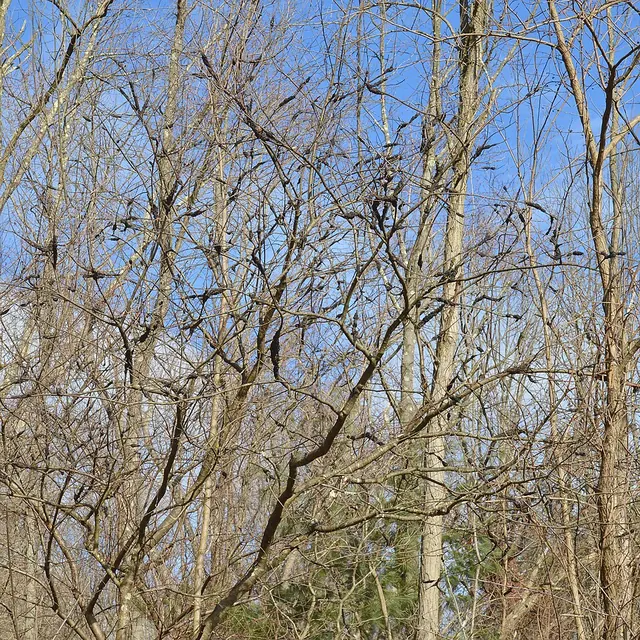
More from university Extension: search Extension pages on black knot, or find a plant diagnostic lab through your state's Extension.
Other diseases
- Anthracnose
- Apple scab
- Bacterial leaf scorch
- Bacterial leaf spot
- Bacterial wetwood (slime flux)
- Bacterial wilt of cucurbits
- Black spot of rose
- Bleeding canker
- Boxwood blight
- Canker diseases
- Cedar-apple and related rusts
- Crown gall
- Damping-off
- Downy mildew
- Dutch elm disease
- Early blight and Alternaria leaf spot
- Elm yellows (phloem necrosis)
- Fire blight
- Fusarium wilt
- Gray mold (Botrytis)
- Late blight
- Mosaic viruses
- Needle cast and tip blight
- Oak wilt
- Powdery mildew
- Root and butt rot
- Root rot (Pythium and Phytophthora)
- Rust
- Septoria leaf spot
- Shade tree anthracnose
- Sooty mold
- Tar spot of maple
- Tomato spotted wilt and impatiens necrotic spot viruses
- Verticillium wilt
- White mold (Sclerotinia)
- White pine blister rust