Plant Health Key / Diseases
Needle cast and tip blight
Rhizosphaera, Dothistroma, Diplodia (Sphaeropsis) and others
Fungi that kill conifer needles or new shoots in wet weather. Needle casts work up from the lower branches over years; Diplodia tip blight stunts and browns the new shoots of older pines.
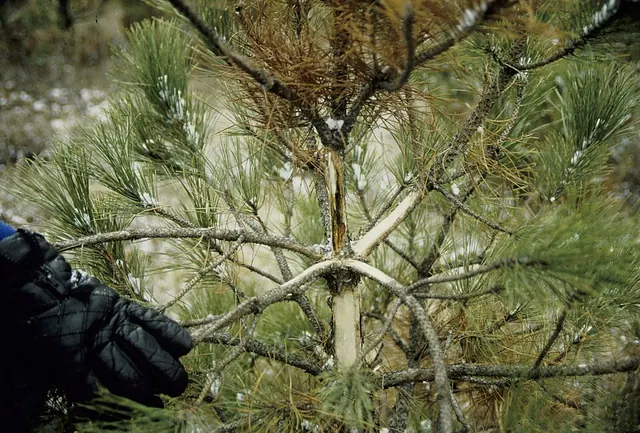
Signs
- Older needles turn brown or purple and drop, lower branches and inner needles first.
- Tiny black dots lined up in rows along dead needles (look with a lens).
- On pine, new shoots stunted with short brown needles, often with resin and black dots at their base.
Risk Factors
Wet weather, crowded and shaded lower branches, sprinklers wetting the needles, and stressed or poorly sited trees.
Prevention
- Space new trees for good air flow and keep sprinklers off the needles.
- Do not shear spruce; remove infected pine shoots in dry weather.
- Plant species that resist the local diseases, such as Norway spruce instead of Colorado blue spruce where Rhizosphaera is common.
Host Crops
Evergreens & conifers (pine, spruce, juniper).
Look-Alikes
Sources
- Rhizosphaera Needle CastMontana State University Extension
- Diplodia Tip BlightMontana State University Extension
- Dothistroma Needle BlightMontana State University Extension
- Rhizosphaera needle castUniversity of Minnesota Extension
- Spruce: Rhizosphaera needle castWashington State University HortSense
Treatment by crop
Cultural, biological and chemical options in the order to use them, and notes written for each crop.
Identification is free. Treatment is on the Pro plan.
Diagnosis Path
- Look the plant over, leaf undersides included. Are insects, mites, slugs, eggs, webbing or droppings on it?
No, only damage or discoloration - Where is the problem?
A tree or shrub - Which part of the tree or shrub shows the problem?
Needles of a pine, spruce, fir, juniper or arborvitae - What is happening to the needles?
New shoots at the branch tips stunted and brown
Not a match? Start the key or describe what you see.
More photos
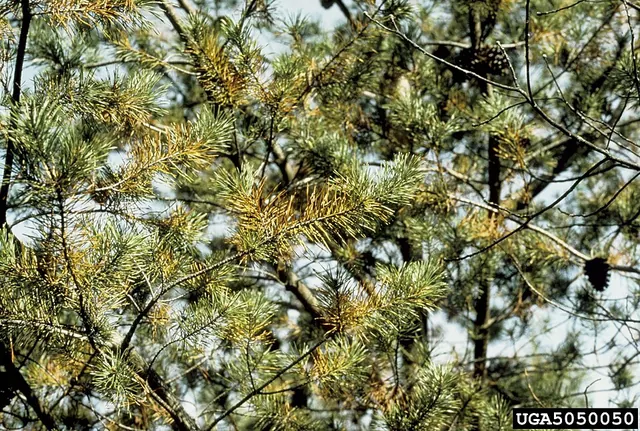
More from university Extension: search Extension pages on needle cast and tip blight, or find your state's plant diagnostic lab.
Other diseases
- Anthracnose
- Apple scab
- Bacterial leaf scorch
- Bacterial leaf spot
- Bacterial wetwood (slime flux)
- Bacterial wilt of cucurbits
- Black knot
- Black rot of the cabbage family
- Black spot of rose
- Bleeding canker
- Boxwood blight
- Brown rot of stone fruit
- Canker diseases
- Cedar-apple and related rusts
- Clubroot
- Common scab of potato
- Crown gall
- Damping-off
- Downy mildew
- Dutch elm disease
- Early blight and Alternaria leaf spot
- Elm yellows (phloem necrosis)
- Fire blight
- Fusarium wilt
- Gray mold (Botrytis)
- Hop latent viroid
- Late blight
- Mosaic viruses
- Oak wilt
- Peach leaf curl
- Powdery mildew
- Root and butt rot
- Root rot (Pythium and Phytophthora)
- Rust
- Septoria leaf spot
- Shade tree anthracnose
- Sooty mold
- Tar spot of maple
- Tomato spotted wilt and impatiens necrotic spot viruses
- Verticillium wilt
- White mold (Sclerotinia)
- White pine blister rust