Plant Problem Diagnosis Key / Growing conditions
Construction and root damage
Most tree roots grow in the top foot of soil and spread past the branch tips. Trenching, paving, soil compaction and new fill soil cut or smother them, and the tree declines months to several years later.
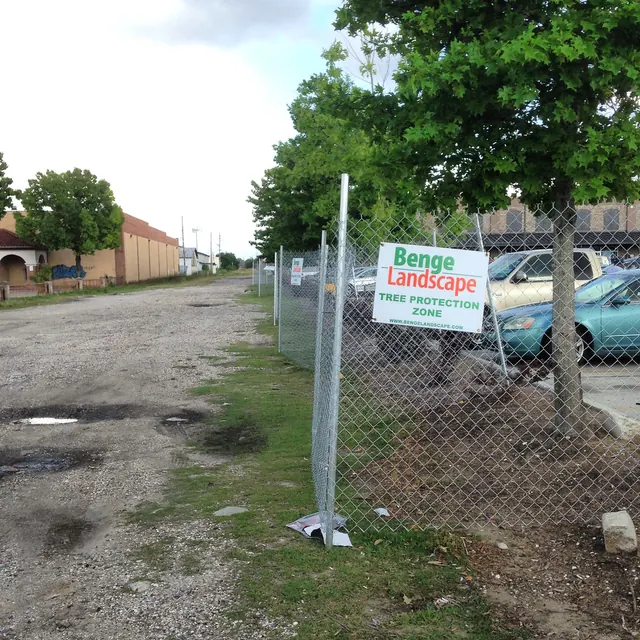
Signs
- Thin crown, small leaves and dead branches, worst on the side where the work was done.
- Leaf scorch and early fall color in dry spells.
- Sprouts on the trunk or main branches, and a new grade, trench, driveway or patio within the root zone.
What favors it
Trenching, digging or grading within the drip line, soil compaction from equipment, new paving, and more than a couple of inches of fill soil over the roots.
Prevention
- Before work starts, fence off a root zone of 1 to 1.5 feet of radius for each inch of trunk diameter.
- Tunnel or bore under roots instead of trenching through them.
- Keep vehicles, stockpiles and fill soil off the root zone.
Crops it shows up on
Shade & ornamental trees; Evergreens & conifers (pine, spruce, juniper).
Often confused with
Sources
- Damaged Tree RootsUniversity of Maryland Extension
- Tree Preservation During ConstructionColorado State University Extension
- Grade Change Problems with TreesUniversity of Maryland Extension
- FNR-FAQ-11: Construction damage to treesPurdue Extension
- How to Protect Trees During Underground WorkArbor Day Foundation
Treatment by crop
Cultural, biological and chemical options in the order to use them, and notes written for each crop.
Identification is free. Treatment is on the Home and Pro plans.
Questions in the key that lead here
- Look the plant over, leaf undersides included. Are insects, mites, slugs, eggs, webbing or droppings on it?
No, only damage or discoloration - Where is the problem?
A tree or shrub - Which part of the tree or shrub shows the problem?
Leaves of a broadleaf tree or shrub - What do the leaves show?
Brown edges and browning between the veins - How does the browning look, and when did it start?
Within a few years of construction, trenching or new soil over the roots
Not a match? Start the key or describe what you see.
More from university Extension: search Extension pages on construction and root damage, or find a plant diagnostic lab through your state's Extension.
Other growing conditions
- Blossom drop
- Blossom-end rot
- Cold and frost injury
- Drought stress (underwatering)
- Edema (oedema)
- Fruit cracking
- Girdling roots and a buried root flare
- Heat and light stress
- Herbicide injury
- Leaf scorch and drought stress
- Light bleaching
- Mower, trimmer and animal injury
- Normal fall needle drop
- Not enough light (stretching)
- Overwatering (low root oxygen)
- Road salt injury
- Southwest injury (winter sunscald and frost cracks)
- Sunscald
- Transplant shock
- Winter burn of evergreens