Plant Problem Diagnosis Key / Growing conditions
Mower, trimmer and animal injury
Bark at the base of a tree is thin, and the living layer just under it carries sugars down to the roots. String trimmers, mowers, voles and rabbits wear it away; a wound that circles most of the trunk kills the tree over a year or two.
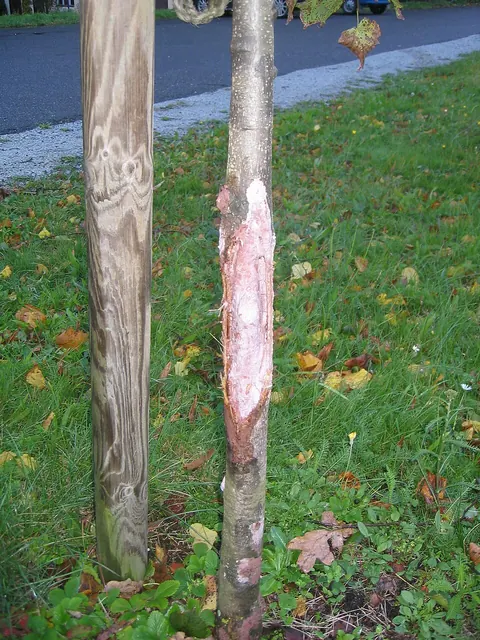
Signs
- Scraped, torn or missing bark at mower or trimmer height, often all the way around young trees.
- Gnawed bark with fine tooth marks low on the trunk after winter (voles under snow, rabbits above it).
- Old wounds at the base; decline in the crown above.
What favors it
Turf grown up to the trunk, string trimmers, voles under deep snow, rabbits, and young, thin-barked trees.
Prevention
- Keep a mulch ring at least 3 feet across around the trunk so mowers and trimmers stay away.
- Guard young trunks with hardware cloth or plastic guards from fall to spring, buried 6 inches and reaching at least 14 inches up, above the snow line.
- Pull mulch and tall grass back from the trunk in fall so voles have no cover.
Crops it shows up on
Shade & ornamental trees; Evergreens & conifers (pine, spruce, juniper); Apple, pear & stone fruit.
Often confused with
Sources
- VolesMontana State University Extension
- Dakota Gardener: Your lawn mower scares treesNDSU Extension
- Mechanical Damage to Trees: Mowing and Maintenance EquipmentPurdue Extension
- Protecting Trees and Shrubs in WinterIowa State University Extension
Treatment by crop
Cultural, biological and chemical options in the order to use them, and notes written for each crop.
Identification is free. Treatment is on the Home and Pro plans.
Questions in the key that lead here
- Look the plant over, leaf undersides included. Are insects, mites, slugs, eggs, webbing or droppings on it?
No, only damage or discoloration - Where is the problem?
A tree or shrub - Which part of the tree or shrub shows the problem?
The base of the trunk or the roots - What do you see at the base?
Scraped, torn or chewed bark
Not a match? Start the key or describe what you see.
More from university Extension: search Extension pages on mower, trimmer and animal injury, or find a plant diagnostic lab through your state's Extension.
Other growing conditions
- Blossom drop
- Blossom-end rot
- Cold and frost injury
- Construction and root damage
- Drought stress (underwatering)
- Edema (oedema)
- Fruit cracking
- Girdling roots and a buried root flare
- Heat and light stress
- Herbicide injury
- Leaf scorch and drought stress
- Light bleaching
- Normal fall needle drop
- Not enough light (stretching)
- Overwatering (low root oxygen)
- Road salt injury
- Southwest injury (winter sunscald and frost cracks)
- Sunscald
- Transplant shock
- Winter burn of evergreens