Plant Health Key / Growing conditions
Growing conditions
Fruit cracking
Fruit swells faster than its skin can stretch when a flush of water follows a dry spell. Ripe and near-ripe fruit cracks most.
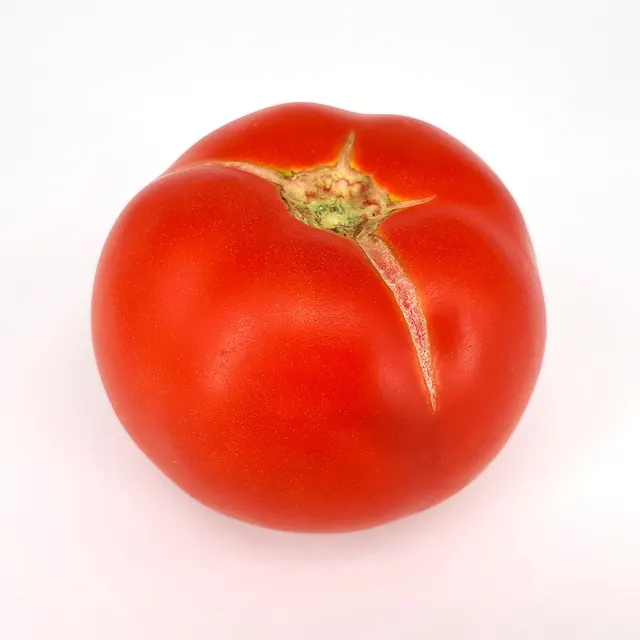
Signs
- Rings of cracks around the stem end, or splits running out from it.
- Appears after heavy rain, or watering after a dry spell.
- Some varieties crack far more than others.
Risk Factors
Uneven watering, heavy rain after dry weather, excess nitrogen, and ripe fruit left on the plant.
Prevention
- Water evenly and mulch.
- Grow crack-resistant varieties.
- Pick fruit before fully ripe when heavy rain is coming.
Host Crops
Tomato, pepper & eggplant; Apple, pear & stone fruit; Cucumber, squash & melon.
Look-Alikes
Sources
- Cracking of VegetablesUniversity of Maryland Extension
- Tomato disordersUniversity of Minnesota Extension
Treatment by crop
Cultural, biological and chemical options in the order to use them, and notes written for each crop.
Identification is free. Treatment is on the Pro plan.
Diagnosis Path
- Look the plant over, leaf undersides included. Are insects, mites, slugs, eggs, webbing or droppings on it?
No, only damage or discoloration - Where is the problem?
Fruit, flowers, buds or tubers - What is wrong with the fruit or flowers?
Cracks, holes, worms, or fruit not forming - What do you see?
Cracks in rings or rays around the stem end
Not a match? Start the key or describe what you see.
More photos
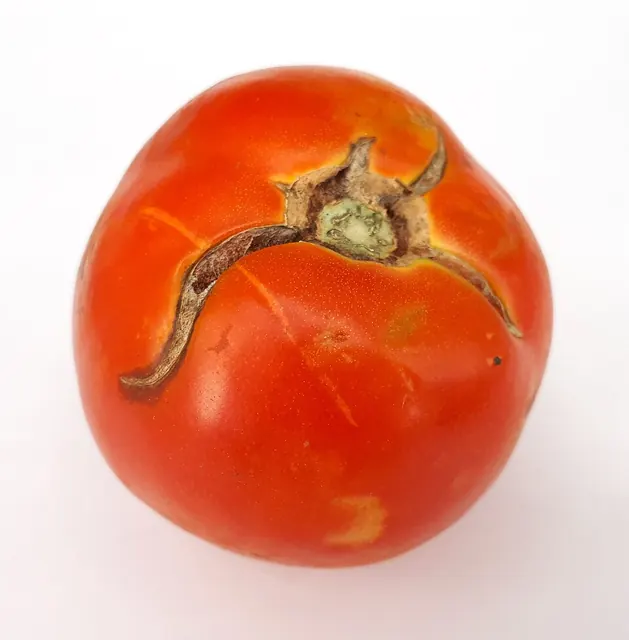
More from university Extension: search Extension pages on fruit cracking, or find your state's plant diagnostic lab.
Other growing conditions
- Blossom drop
- Blossom-end rot
- Bolting
- Cold and frost injury
- Construction and root damage
- Drought stress (underwatering)
- Edema (oedema)
- Girdling roots and a buried root flare
- Hail and wind damage
- Heat and light stress
- Herbicide injury
- Leaf roll of tomato
- Leaf scorch and drought stress
- Light bleaching
- Mower, trimmer and animal injury
- Normal fall needle drop
- Not enough light (stretching)
- Overwatering (low root oxygen)
- Poor pollination
- Road salt injury
- Root-bound plants
- Southwest injury (winter sunscald and frost cracks)
- Sunscald
- Transplant shock
- Winter burn of evergreens