Plant Problem Diagnosis Key / Growing conditions
Normal fall needle drop
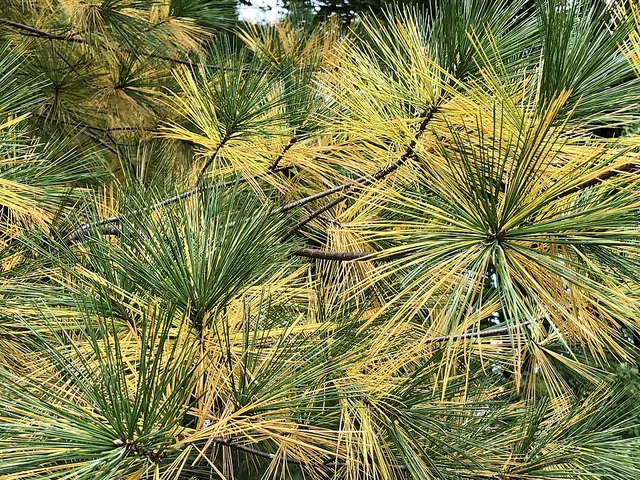
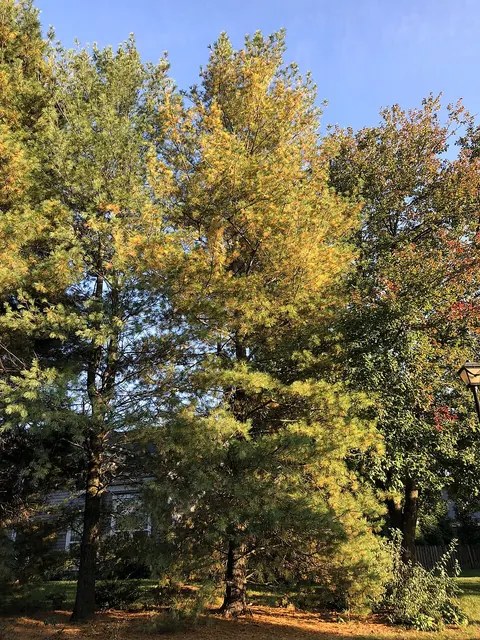
Evergreens shed their oldest needles every year. Pine, arborvitae and other conifers turn their inner needles yellow or brown in early fall and drop them. The new growth at the tips stays healthy, and nothing needs doing.
Signs
- Evenly yellow or brown needles on the inside of the tree, all of the same age.
- Green, healthy needles at the branch tips.
- Shows in late summer and fall, and is heavier after a dry year.
What favors it
The normal yearly cycle, heavier after a dry summer or fall.
Prevention
- Water through dry falls so the tree goes into winter well hydrated.
Crops it shows up on
Evergreens & conifers (pine, spruce, juniper).
Often confused with
Sources
- Seasonal Needle DropMontana State University Extension
- Normal Needle DropPurdue Plant and Pest Diagnostic Lab
- Seasonal Needle Drop on EvergreensNebraska Extension
Treatment by crop
Cultural, biological and chemical options in the order to use them, and notes written for each crop.
Identification is free. Treatment is on the Home and Pro plans.
Questions in the key that lead here
- Look the plant over, leaf undersides included. Are insects, mites, slugs, eggs, webbing or droppings on it?
No, only damage or discoloration - Where is the problem?
A tree or shrub - Which part of the tree or shrub shows the problem?
Needles of a pine, spruce, fir, juniper or arborvitae - What is happening to the needles?
Inner or lower needles yellowing, browning or dropping - What do the older needles look like?
Evenly yellow in fall on the inside of the tree; new growth healthy
Not a match? Start the key or describe what you see.
More photos
More from university Extension: search Extension pages on normal fall needle drop, or find a plant diagnostic lab through your state's Extension.
Other growing conditions
- Blossom drop
- Blossom-end rot
- Cold and frost injury
- Construction and root damage
- Drought stress (underwatering)
- Edema (oedema)
- Fruit cracking
- Girdling roots and a buried root flare
- Heat and light stress
- Herbicide injury
- Leaf scorch and drought stress
- Light bleaching
- Mower, trimmer and animal injury
- Not enough light (stretching)
- Overwatering (low root oxygen)
- Road salt injury
- Southwest injury (winter sunscald and frost cracks)
- Sunscald
- Transplant shock
- Winter burn of evergreens